
 WordPress Development
 E-commerce Development
 Website Maintenance
 On Page SEO
 Off Page SEO
 Technical SEO
 Local SEO
 Social Media Management
 Social Media Optimization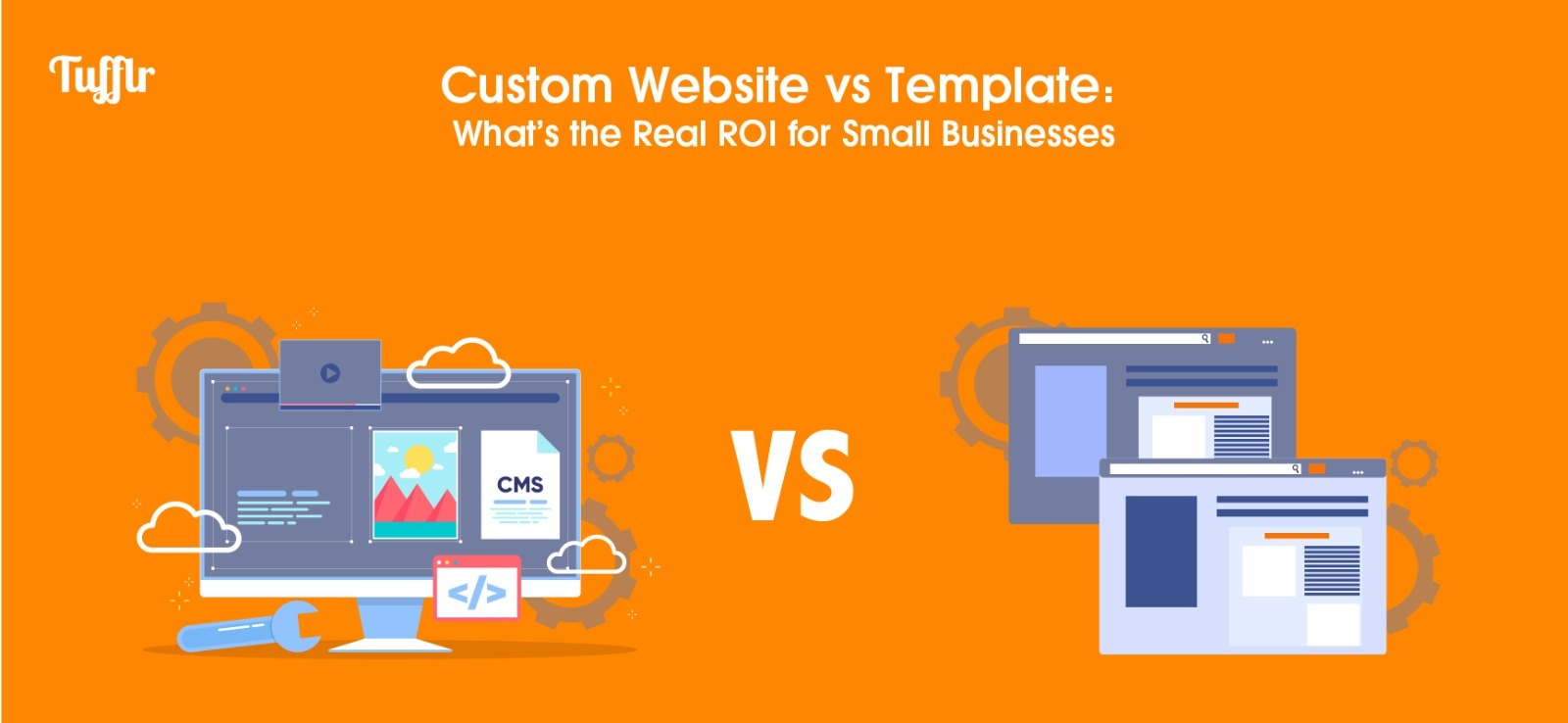
Choosing between a Custom Website vs Template is one of the first and most important decisions a small business owner makes. While a template may look cheaper at first glance, the long-term return on investment (ROI) often depends on factors like performance, SEO, security, and conversion. This post compares templates vs custom website approaches, explores custom website development benefits, breaks down custom website cost, and explains why custom web design vs templates is not just a design choice but a strategic business decision.
Why ROI Matters: beyond upfront cost
Many small businesses focus on initial price. But the real question is: how quickly will your website pay for itself? The right site should attract visitors, convert them into leads or customers, and reduce maintenance headaches. When you evaluate custom website development, consider lifetime value, not just the sticker price. A low initial expense can become expensive if you lose traffic, conversions, or brand credibility.
Head-to-head: Templates vs Custom Website quick comparison
| Criteria | Template Website | Custom Website |
|---|---|---|
| Initial Price | Low | Higher |
| Time to Launch | Fast | Longer |
| Performance & Speed | Varies (often slower) | Optimized |
| SEO-readiness | Limited | Built-in best practices |
| Scalability | Constrained | Designed to grow |
| Brand Differentiation | Generic | Unique |
| Long-term ROI | Mixed | Stronger potential |
This table captures the high level differences when thinking about custom web design vs templates.
Deep dive: Performance, SEO, and conversions
Performance and technical health
Template themes often bundle features and plugins that slow pages down. Slow load times hurt rankings and conversions. Custom website development includes performance first coding practices minified assets, image optimization, and lightweight frameworks that boost Core Web Vitals and visitor retention.
SEO and discoverability
Search engines reward speed, structured data, and clean markup elements more reliably delivered by custom solutions. When comparing templates vs custom website, a custom build gives you the flexibility to implement technical SEO from the ground up (schema, semantic HTML, custom sitemaps), which improves organic traffic and long-term ROI.
Conversion optimization (CRO)
A custom site is designed around user journeys and conversion funnels clear CTAs, tailored landing pages, and A/B testing hooks. Templates usually provide one-size-fits-all layouts that aren’t optimized for specific buyer personas. For small businesses, higher conversion rates quickly translate into measurable ROI.
Real Cost Considerations: Custom Website Cost Explained
Template-Based Website Cost
Custom Website Cost
But look beyond build cost: ongoing maintenance, plugin updates, security patches, and redesigns. Templates can require frequent, unpredictable fixes (plugin conflicts, theme updates) increasing total cost of ownership. A thoughtfully executed custom website development reduces those surprises, improving long-term ROI.
The Hidden Cost Most Businesses Miss
Beyond the initial build, every website needs updates, security checks, and performance improvements. Template websites often rely heavily on plugins, which can lead to:
- Compatibility issues
- Frequent fixes
- Unexpected downtime
A well-built custom website is cleaner, more stable, and easier to maintain. This means fewer technical issues, lower long-term maintenance effort, and better ROI.

Tufflr’s approach: maximizing ROI with custom builds
At Tufflr, we combine strategy, design, and engineering to deliver custom sites that drive measurable results. Here’s how we approach custom web design vs templates to maximize ROI for small businesses:
Discovery & Strategy
We start by understanding your business objectives, target audience, and KPIs so the site’s architecture supports measurable goals.
Performance-first Development
Our custom website development focuses on speed and reliability server-side optimizations, efficient code, and scalable hosting recommendations.
SEO-integrated Build
From schema markup to crawlable site structure, Tufflr embeds SEO best practices during development, not as an afterthought.
Conversion Design
We design CTAs, forms, and layouts that guide users to action testing and refining to improve conversion metrics over time.
Maintenance & Growth
Instead of leaving clients with an unmaintained product, Tufflr provides managed maintenance plans that keep your site secure and up-to-date lowering long-term custom website cost.
A short ROI example (Easy to Understand)
- The website loads faster
- The design builds more trust
- The content and buttons guide visitors better
As a result:
- More people find the website through search engines
- More visitors take action by filling out forms or calling
Over time, even a small increase in traffic and conversions can lead to noticeably higher monthly revenue.
Because a custom website is built to support long-term growth, many businesses recover their investment within a short period and continue benefiting from higher returns year after year.
When to choose a template (and when not to)
Choose a template if:
- You need a brochure site fast and budget is extremely tight.
- You have a one-page informational site with minimal functionality.
Avoid templates if:
- Your business depends on lead generation, e-commerce, or complex integrations.
- Brand differentiation and SEO driven growth are priorities.
This is the core of the templates vs custom website decision speed and cost now vs sustained growth and ROI later.
Migration & maintenance: hidden costs of templates
Conclusion: the ROI answer
When debating Custom Website vs Template, remember: templates save money up front; custom builds generate value over time. If your goal is to scale, improve search visibility, and increase conversions, custom website development backed by an agency like Tufflr is the smarter investment.